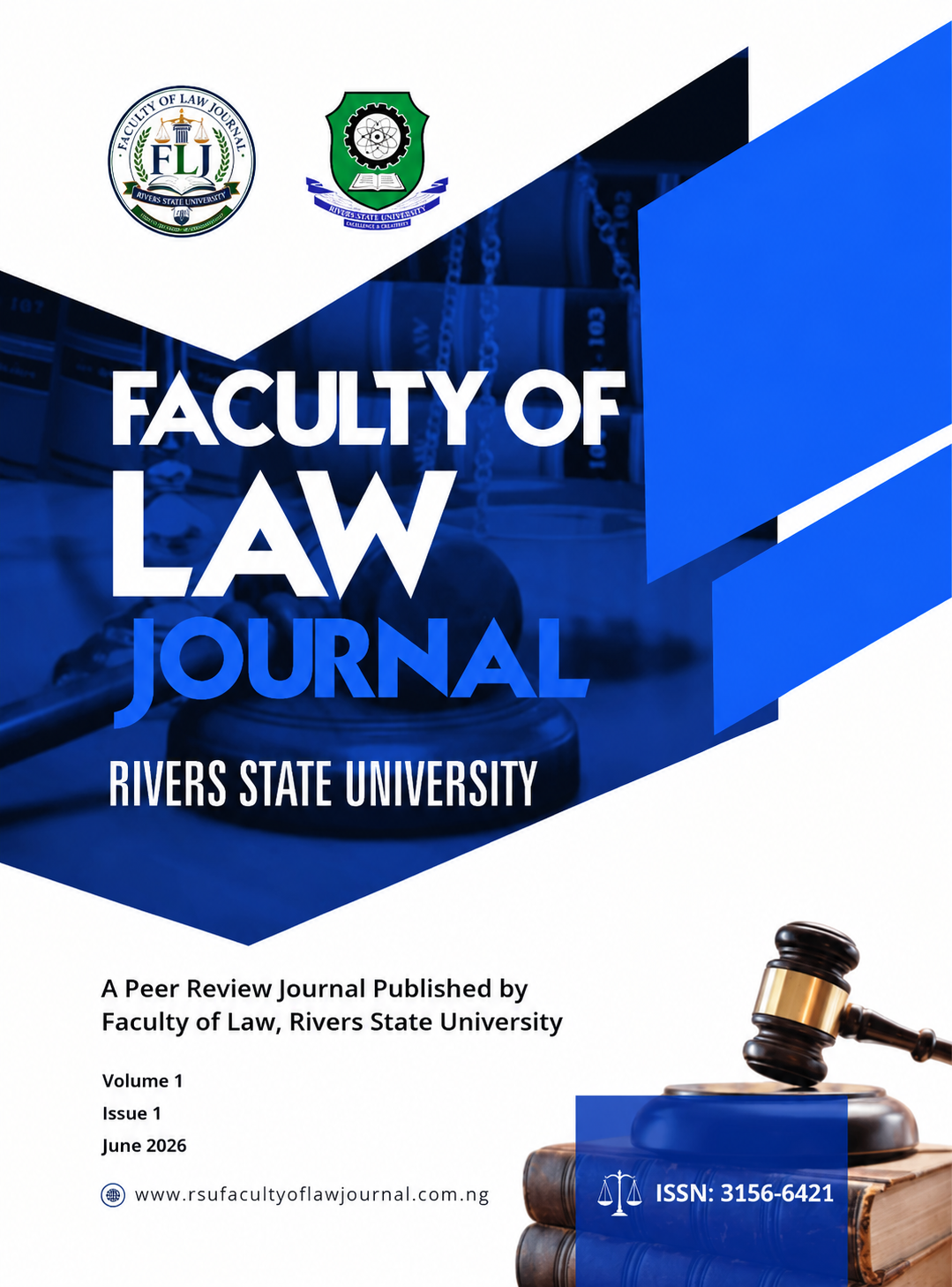
LEGAL REGIME ON CRYPTOCURRENCY AND OTHER FORMS OF DIGITAL CURRENCIES IN NIGERIA: LESSONS FROM EL SALVADOR
DOI:
https://doi.org/10.68584/rsuflj.v1i1.19Keywords:
Blockchain, Cryptocurrency, Digital Currencies, DataAbstract
Cryptocurrency made its entry into Nigeria around 2012 with the growing global popularity of Bitcoin. Early adopters were primarily tech enthusiasts and investors seeking alternative financial opportunities. By 2016, Bitcoin and other cryptocurrencies began to gain traction as Nigerians looked for ways to hedge against economic instability and inflation. The legal landscape for cryptocurrency and blockchain is still evolving. The Central Bank of Nigeria (CBN) has issued warnings about the risks associated with cryptocurrency investments, emphasizing the potential for fraud, volatility, and the lack of consumer protections. In February 2021, the CBN directed all financial institutions to close accounts transacting in or operating on cryptocurrency exchanges. This directive sparked significant debate about the balance between innovation and regulation. The Nigerian legal system also faces challenges in adapting existing laws to address the unique characteristics of blockchain technology. Issues such as the legal recognition of smart contracts, the enforceability of blockchain-based agreements, and the jurisdictional complexities of cross border blockchain transactions are areas that require comprehensive legal analysis and new legislative frameworks. This paper adopted the doctrinal research methodology. The findings revealed that there are existing Nigerian laws and regulations on cryptocurrency and blockchain technology are currently misaligned with international standards due to their nascent and fragmented nature. This paper holds that Nigeria should establish clear and comprehensive regulations for cryptocurrency and blockchain technology to address aspects such as licensing requirements for exchanges, consumer protection, anti-money laundering (AML), and counterterrorism financing (CTF) measures.
Downloads
Published
Issue
Section
License
Copyright (c) 2026 Faculty of Law Journal – Rivers State University

This work is licensed under a Creative Commons Attribution-NonCommercial-NoDerivatives 4.0 International License.