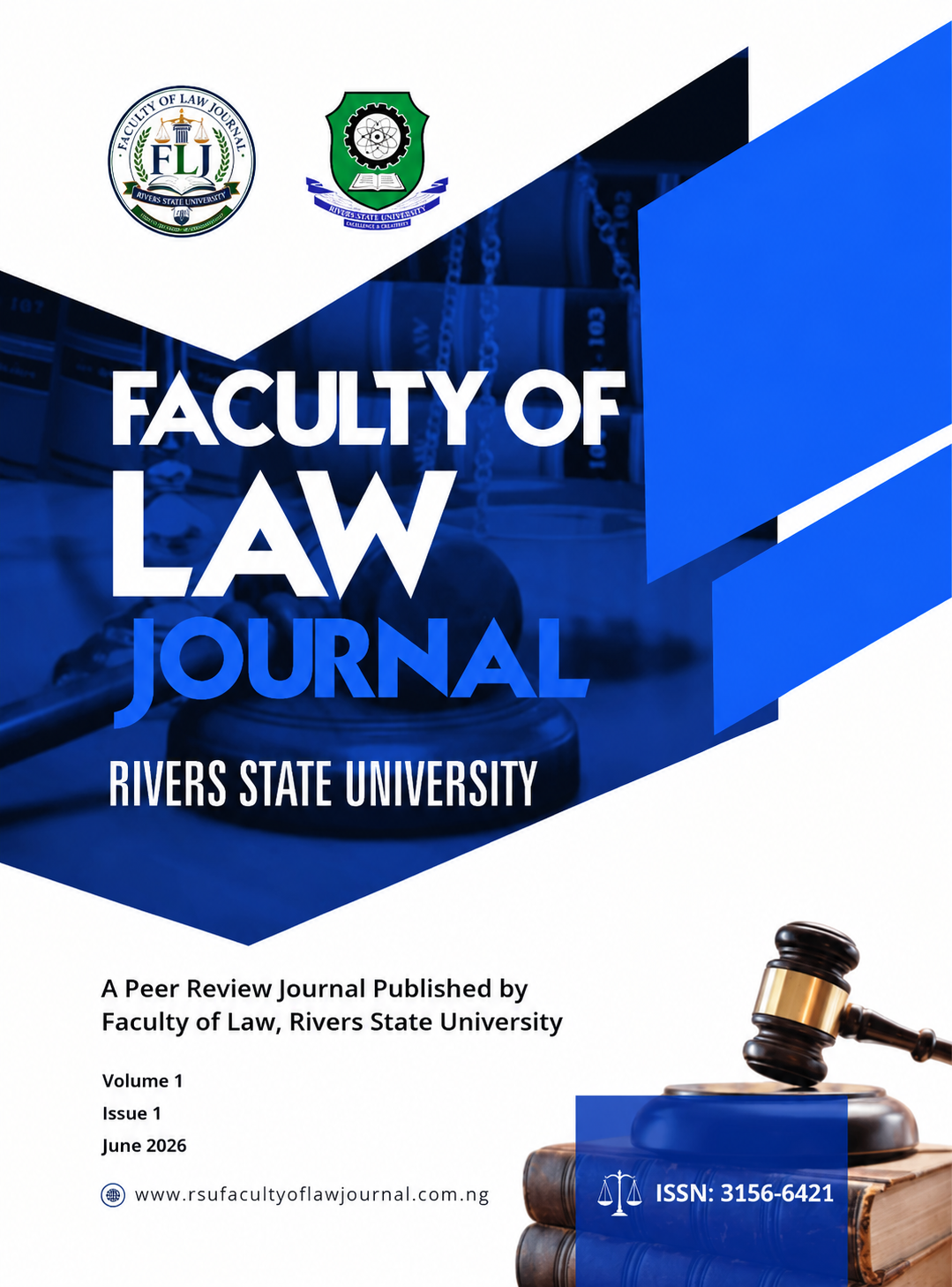
LEGAL X-RAY OF THE NIGERIAN CONTENT DEVELOPMENT & MONITORING BOARD (NCDMB) REGULATIONS: ITS BENEFITS AND CHALLENGES
DOI:
https://doi.org/10.68584/rsuflj.v1i1.20Keywords:
Local Content, Petroleum Industry, Capacity Building in NigeriaAbstract
This study examines the Nigerian Content Development and Monitoring Board (NCDMB) regulations, highlighting their benefits and challenges in promoting local participation in the oil and gas sector. It traces the evolution of Nigeria’s Local Content Act, 2010, enacted to enhance indigenous capacity, technology transfer, and economic growth by reducing dependence on foreign expertise. The study adopts the doctrinal research methodology, relying on primary sources such as statutes and regulations, and secondary sources including textbooks, journal articles and reports. The findings reveal that the NCDMB regulations have stimulated job creation, capacity building, and the establishment of fabrication yards and manufacturing hubs, contributing to local industrialization and capital retention. However, the study also identifies major challenges, including non-compliance by multinational companies, corruption, inadequate infrastructure, and ambiguous statutory provisions that hinder enforcement and transparency. In conclusion, while the NCDMB regulations remain crucial for achieving Nigeria’s economic diversification and sustainable development goals, implementation weaknesses continue to limit their impact. The study recommends strengthening monitoring mechanisms, improving infrastructure, enhancing funding through the Nigerian Content Intervention Fund (NCIF), promoting local research and innovation, and expanding training programs to bridge the skills gap ensuring the full realization of Nigeria’s local content objectives in the oil and gas sector.
Downloads
Published
Issue
Section
License
Copyright (c) 2026 Faculty of Law Journal – Rivers State University

This work is licensed under a Creative Commons Attribution-NonCommercial-NoDerivatives 4.0 International License.